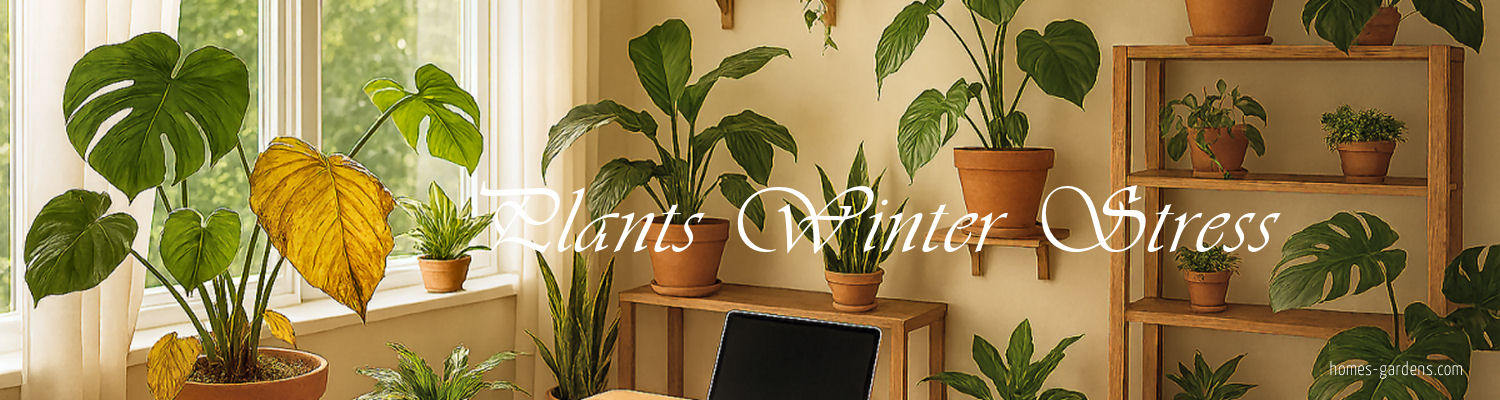
🌿 Plant Winter Stress – Indoor Plant Care
Winter Stressors on Indoor Plants
"As the world outside turns grey and the mercury drops, our homes become our sanctuaries—and our indoor plants are the heartbeat of those spaces. However, the transition from autumn’s glow to winter’s chill is a shock to any potted inhabitant. Between the parched air of central heating and the 'vanishing' sunlight, your plants are entering a period of deep biological change. Managing winter stress isn't just about survival; it's about understanding the quiet rhythm of dormancy. In this guide, we go beyond the watering can to explore how a few intentional shifts in care can keep your green companions vibrant until the first buds of spring."
💡 Quick Tip: Dormancy is normal! If your plant stops growing in winter, it’s conserving energy. Don’t fertilize, and reduce watering.
⚠️ Warning: Leaves touching cold windows can get frostbite even if the room is warm. Use plant stands or move them slightly back.
The Winter Stressor Table
| The Winter Stressor | The Visual Sign | The "Pro" Fix |
|---|---|---|
| Low Humidity | Brown, "crispy" leaf tips | Group plants together to create a "breathable" micro-climate. |
| Over-watering | Yellowing, mushy stems | The "Finger Test"—if it's not dry 2 inches down, walk away! |
| Light Deficit | Leggy stems, reaching for windows | Rotate the pot 90° weekly for even exposure. |
| Salt Buildup | White crust on soil surface | Flush with distilled water; stop all feeding. |
The Winter Warriors: Plants That Don’t Quit
Snake Plant (Sansevieria) – armor against winter dryness.
ZZ Plant (Zamioculcas) – stores water in rhizomes for low-light survival.
Cast Iron Plant (Aspidistra) – handles cold drafts and dim light.
ZZ Plant (Zamioculcas) – stores water in rhizomes for low-light survival.
Cast Iron Plant (Aspidistra) – handles cold drafts and dim light.
Wax Plant (Hoya) – thick leaves hold moisture; trails or climbs well.
Pothos (Golden/Jade) – slow winter growth, great health indicator, easy to propagate.
Christmas Cactus - beautiful flowers by Christmas.
Pothos (Golden/Jade) – slow winter growth, great health indicator, easy to propagate.
Christmas Cactus - beautiful flowers by Christmas.
🪴 Winter Rescue Checklist
- The "Knuckle" Test: Check soil moisture up to the second knuckle.
- The "Shoulder" Check: Monitor drafts and heat near plant location.
- The Light "Deep Clean": Wipe dust off leaves to boost light absorption.
- Humidity "Huddle": Group plants to create a micro-climate.
- The "No-Fly" Zone: Inspect for pests and isolate affected plants.
Frequently Asked Questions: Winter Plant Care
- Q: Why are the tips of my plant leaves turning brown and crispy?
- A: Usually low humidity. Group plants together, use a humidifier, or place pots on pebble trays.
- Q: My plant hasn’t grown a single new leaf in two months. Is it dying?
- A: Likely not. Many plants enter dormancy in winter to conserve energy.
- Q: Should I fertilize my plants during the winter?
- A: Generally, no. Slow-growing plants cannot process nutrients; fertilizing can burn roots.
- Q: How can I tell if I’m overwatering or underwatering?
- A: Check pot weight. Light = thirsty; heavy and soggy = overwatered.
- Q: Can I repot my plants in winter if they outgrew their space?
- A: Best to wait until spring (March-April) for repotting to avoid stress.
1. Photosynthesis and Dust
Dust on leaves blocks light and reduces photosynthesis by up to 20–30% in low-light winter conditions. Wiping leaves gently restores their ability to capture light efficiently. “Leaf spa days” are not just cosmetic — they literally help plants survive winter. I love doing this when I have the time. It's spring cleaning for my plants.2. Heliotropism (Plants Seeking Light)
Plants naturally grow toward light sources. In winter, limited sunlight causes uneven growth. Rotate the plant 90° weekly to balance light exposure and avoid leaning or leggy stems. This also encourages more robust photosynthesis on all sides of the plant. Right I have a cactus struggling to the light.3. Stomatal Behavior & Humidity
Stomata (tiny pores on leaves) regulate water loss.In winter, indoor air is extremely dry:
Low humidity → stomata close → less gas exchange → slower growth.
Solution: Group plants together (humidity huddle) or use pebble trays to raise micro-humidity.
4. Micro-Climate Awareness
Temperature isn’t uniform in a room: cold windows, drafts, or cold floors can stress plants. Even a warm room can have micro-climates that affect roots and leaves differently. Elevate pots, avoid drafts, and maintain gentle airflow to prevent mold and cold stress.5. Slow Acclimation
Rapid changes in light or temperature can shock plants, causing sun scorch or stress. Gradually move plants closer to windows or heat sources — let them adapt slowly.6. Winter Survival Strategy
Many indoor plants slow their metabolism (dormancy), reducing growth. Accept “no growth” as normal — don’t force fertilizer or water. Species like Snake Plant, ZZ Plant, and Cast Iron Plant are naturally adapted to this slow winter rhythm.Hint:
"Don't give up on the 'dead' pot!Calla lilies may look dead in a pot of soil, but beneath the surface, the rhizome is resting and gathering energy. The secret? Stop watering and let it sleep until the first signs of green appear in spring."
This happen to me - I turned the pot over and dumped all the soil and it was fine and hibernating (dormant) could thing they don't bite. I was surprise. I was sure it was dead!
"Winter isn't a season of failure for your garden; it’s a season of rest. By slowing down our care to match their pace, we aren't just keeping them alive—we are learning the art of patience."